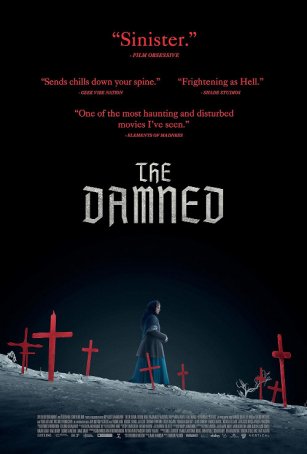
U.S. Release Date: 2025-01-03
MPAA Rating: "R" (Violence, Gore)
Genre: Horror
Director: Thordur Palsson
Cast: Odessa Young, Joe Cole, Lewis Gribben, Siobhan Finneran, Francis Magee, Rory McCann
Although director Thordur Palsson succeeds in developing the setting and crafting an unnerving atmosphere, the screenplay fails in several critical areas.

U.S. Release Date: 2024-12-25
MPAA Rating: "R" (Profanity, Nudity)
Genre: Drama
Director: Gia Coppola
Cast: Pamela Anderson, Jamie Lee Curtis, Dave Bautista, ...
The performance of Pamela Anderson is the selling point but one can rightly question whether it is enough to bolster the malnourished narrative.

U.S. Release Date: 2024-12-25
MPAA Rating: "R" (Profanity, Sexual Content, Nudity, Drugs)
Genre: Drama/Musical
Director: Michael Gracey
Cast: Robbie Williams, Frazer Hadfield, Kate Mulvany, ...
Although Robbie Williams fails to offer a dramatic life story worthy of a big-screen telling, two stylistic/narrative choices make this overall a compelling bio-pic.
Latest ReelThoughts
-
 Jan 3rd 2025 | Rewinding 2024 - The Year in Film
- Jan 3rd 2024 | Rewinding 2023 - The Year in Film
- Jan 4th 2023 | Rewinding 2022 - The Year in Review (Including Top 10 List)
- Dec 31st 2021 | Rewinding 2021: The Year in Film (Including the Top 10)
- Jan 16th 2021 | Rewinding 2020: The Year in Movies (The Top 10)
- Feb 2nd 2020 | Berardinelli's Ballot: The 2020 Oscars
- Dec 31st 2019 | Rewinding 2019: The Year in Review
Latest VideoViews
- Nov 20th 2024 | Strangeland
- Nov 14th 2024 | Pumping Iron
- Nov 7th 2024 | Shadow of a Doubt
- Oct 31st 2024 | Ghost Story
- Oct 24th 2024 | Lost Boys, The
- Oct 17th 2024 | Notorious
- Oct 9th 2024 | Angel


U.S. Release Date: 2024-12-25
MPAA Rating: "R" (Profanity, Sexual Content)
Genre: Drama
Director: James Mangold
Cast: Timothee Chalamet, Edward Norton, Elle Fanning, Monica Barbaro, Boyd Holbrook, Dan Fogler, Norbert Leo Butz, Scoot McNairy
Less a traditional bio-pic and more a picture of an era and an exploration of the impact of Bob Dylan on those around him.

U.S. Release Date: 2024-12-25
MPAA Rating: "PG-13" (Sports Violence, Profanity, Sexual Content)
Genre: Drama
Director: Rachel Morrison
Cast: Ryan Destiny, Brian Tyree Henry, Olunike Adeliyi, De’Adre Aziza
Does not break any molds but expertly crafts familiar material into an end product that will likely appeal to a wide audience.

U.S. Release Date: 2024-12-25
MPAA Rating: "R" (Violence, Disturbing Images, Sexual Content, Nudity)
Genre: Horror
Director: Robert Eggers
Cast: Bill Skarsgard, Nicholas Hoult, Lily-Rose Depp, Aaron Taylor-Johnson, Emma Corrin, Willem Dafoe, Ralph Ineson, Simon McBurney
With its striking images, pervasive atmosphere, and incessant sense of dread, "Nosferatu" leaves an impression that proves hard to shake.

U.S. Release Date: 2024-12-20
MPAA Rating: "PG"
Genre: Animated/Adventure
Director: Barry Jenkins
Cast: Aaron Pierre, Thandiwe Newton, Mads Mikkelson, Donald Glover, Tiffany Boone, Billy Eichner, Seth Rogen, John Kani, Kelvin Harrison Jr., Blue Ivy Carter
A movie absolutely no one in the general public was clamoring for and, although many will see it, the well-earned “unnecessary” label should stick.
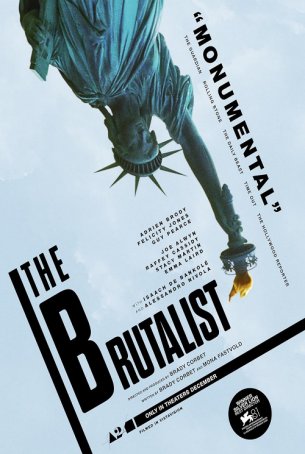
U.S. Release Date: 2024-12-20
MPAA Rating: "R" (Explicit Sexual Content, Nudity, Profanity, Drugs)
Genre: Drama
Director: Brady Corbet
Cast: Adrien Brody, Felicity Jones, Guy Pearce, Joe Alwyn, Raffey Cassidy, Stacy Martin, Alessandro Nivola, Issach De Bankole
Rewards patience not only in the way it crafts its central character but develops the era in which it transpires.

U.S. Release Date: 2024-12-20
MPAA Rating: "R" (Profanity, Sexual Content, Nudity)
Genre: Thriller
Director: Halina Reijn
Cast: Nicole Kidman, Harris Dickinson, Antonio Banderas, Sophie Wilde, Esther McGregor, Vaughan Reilly
Perhaps not as gloriously, guiltily entertaining as some of the films writer/director Halina Reijn used as models but it offers its own pleasures.

U.S. Release Date: 2024-12-13
MPAA Rating: "R" (Violence, Profanity)
Genre: Action/Adventure
Director: J.C. Chandor
Cast: Aaron Taylor-Johnson, Ariana DeBose, Fred Hechinger, Alessandro Nivola, Christopher Abbott, Russell Crowe, Levi Miller
The advance word-of-mouth has oversold its badness; instead of being truly awful, it is simply mediocre.